2026-09-30
How long does one curing cycle take? Planning daily output around a 6-hour cycle
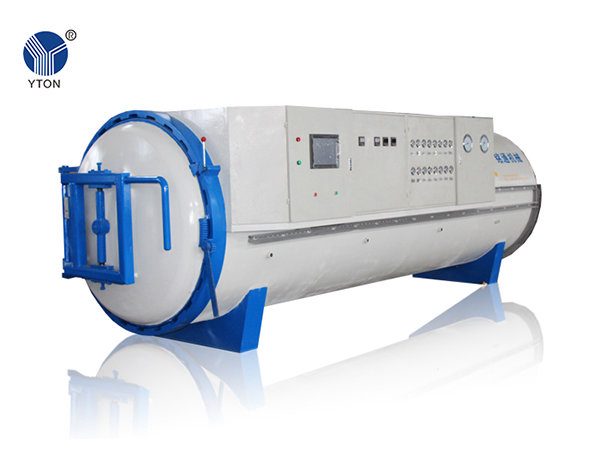
When buyers ask about capacity, the first question is usually: how many loads can the curing chamber do in a day? The answer starts with how long one load takes. On our 20-tyre cold retreading lines, one cycle takes about 6 hours. Here is where those 6 hours go, and what they mean for daily output.
Where the 6 hours go.
1. Heating: about 40 minutes. The door is closed, the safety interlock engaged, and the fan and heaters start. At about 90 °C the vacuum stage begins; see "One curing cycle, step by step" for the details.
2. Curing at temperature: about 3 hours. Timing starts when the chamber reaches its set point (115 °C as delivered). We plan on 3 hours; the actual time follows the rubber supplier's process card and the tread thickness. Thicker treads need longer.
3. Cooling: about 30 to 40 minutes. Air supply off, fan stopped. Once cooled, the chamber, tube and envelope pressures are all released to zero before the door is opened. Never open a chamber under pressure.
4. Unloading, loading and leak testing. The rest of the time goes on pulling out the finished load, pushing in the next one and leak-testing every tyre.
Buffing, repair and building happen in parallel. While the chamber is curing, the stations upstream prepare the next load: buffing, filling injuries, building the tread, fitting envelopes and rims. That is why envelopes and rims are sized for two loads, one in the chamber and one being prepared. A 20-tyre chamber comes with 40 sets; a 16-tyre line comes with 32.
Daily output. On two shifts, the chamber runs 2 cycles a day: 20 tyres × 2 cycles = 40 tyres a day. Over 250 to 300 working days, that is 10,000 to 12,000 tyres a year.
Why a third cycle is usually not worth it. A third cycle needs enough people on the night shift to strip and fit envelopes, and a short-handed crew makes mistakes. To go beyond 50 tyres a day, the steadier route is a second chamber: two 20-tyre chambers give 80 tyres a day.
The upstream machines have spare capacity. The gantry buffer takes about 3 minutes per tyre, and so does the pressing machine, so one of each can handle well over a hundred tyres per shift. Expanding means adding a chamber, not more buffers or builders. A good layout reserves the space for the second chamber from day one, so it can be moved in and connected later.
Power follows the chamber too. The curing chamber is the largest power user on the line, typically 50 to 96 kW. A 20-tyre chamber is about 65 kW, and a complete 20-tyre line has about 120 kW installed. A chamber that is too big heats empty positions for nothing; one that is too small caps your output. Start from the tyres you need per day, then work back to the chamber size and the number of cycles.
To run the numbers for your own tyre sizes and output, send your tyre sizes, target daily output and number of shifts to mingtong@yton.cc, or start with the selection calculator on our website: new.yton.cc/en/calculator/.