2026-07-15
Cold retread vs hot retread: the difference, and how to choose
Tyre retreading splits into two processes — “cold” and “hot” retreading — and newcomers often mix them up. Put simply, the difference is whether the new tread is made in advance or formed on the spot.
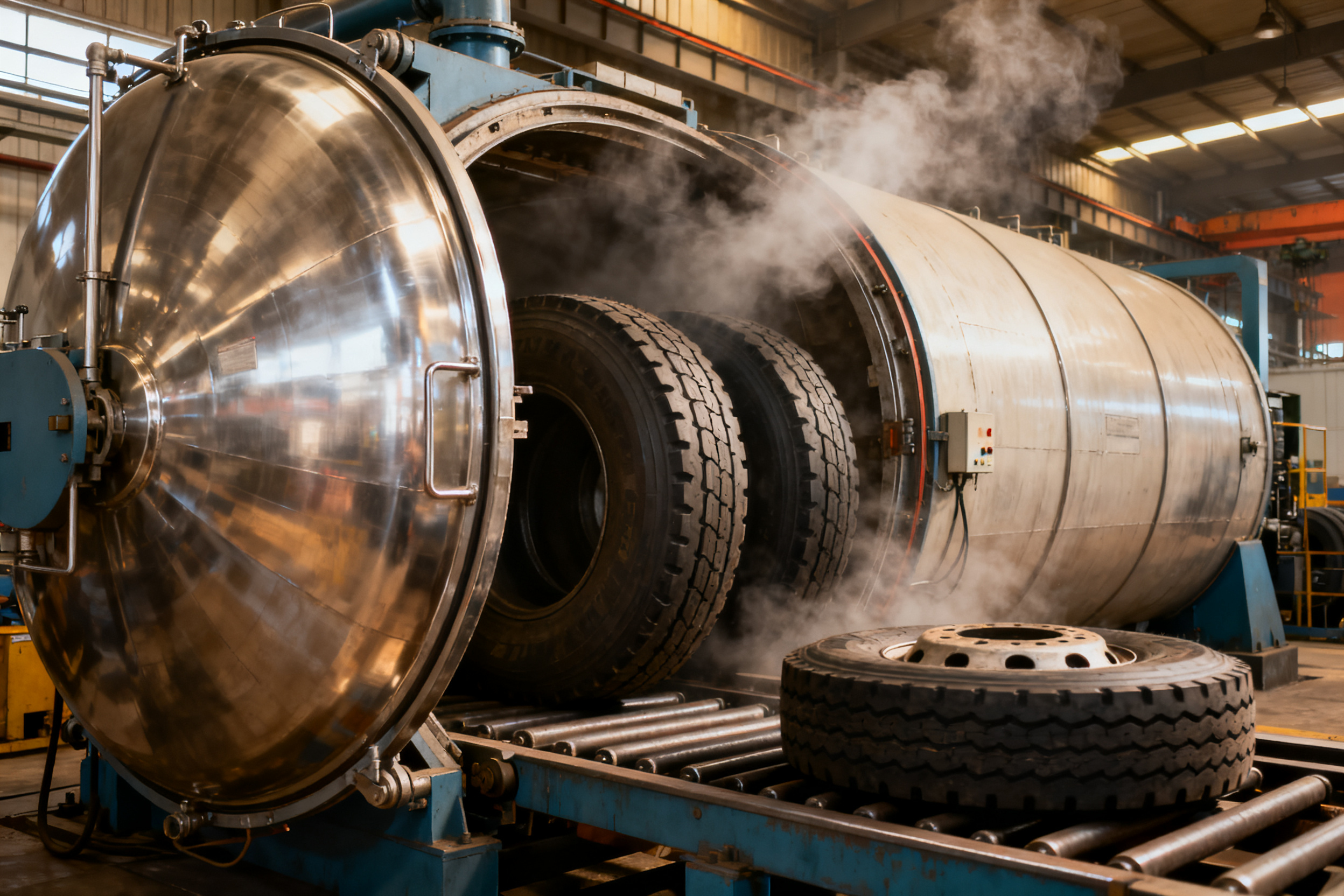
Cold retread (pre-cure): uses a ready-made tread rubber that was vulcanized in advance at the factory (precured tread). It's applied to the buffed casing, then cured in a curing chamber at a relatively low temperature (about 100–115°C) under heat and pressure to bond tread and casing firmly. The tread pattern is consistent, quality is stable, and it's gentle on the casing — today's mainstream process for TBR truck tyres, and YTON's main focus.
Hot retread (mould cure): uncured rubber is applied to the casing and formed in one piece inside a patterned mould at high temperature. It gives a monolithic feel but runs hotter and is tougher on the casing; it's used more for certain tyre types.
Which to choose? For the vast majority of truck and bus tyres, cold retread wins — mature equipment, high yield, changeable patterns, casing-friendly. Only specific needs call for hot retread.
The heart of a cold-retread line is the buffing machine, the pressing (building) machine and the curing chamber. Tell us your tyre types and output, and YTON will design a cold-retread line for you.